

Hair loss, especially the common hereditary type known as Androgenetic alopecia (male-pattern baldness), affects millions of men (and some women) worldwide. If you’re looking into how to regrow hair with finasteride, here’s a detailed, science-backed article in simple language that covers:
- How finasteride works to promote hair regrowth
- The benefits & limitations of this treatment
- A spotlight on a specific product you asked about
- How combining finasteride with Minoxidil can improve outcomes
What causes hair loss?
To understand how finasteride works, first a brief look at what causes hair loss in the common type of pattern baldness.With androgenetic alopecia, hair follicles (especially at the crown and temples) become sensitive to a hormone called Dihydrotestosterone (DHT). DHT is formed when the enzyme 5‑alpha‑reductase converts testosterone into DHT.
DHT binds to receptors in the hair follicles, triggering a process called “miniaturisation”: the follicles shrink, produce thinner hairs, and eventually become inactive.
The longer hair has been absent or the follicles dormant, the harder it is to reverse the damage.
How does finasteride promote hair regrowth?
Finasteride is a prescription medication whose primary mechanism is to block the conversion of testosterone into DHT by inhibiting the type II 5-alpha-reductase enzyme.
Here’s how that translates into hair-regrowth effect:
- DHT reduction – Finasteride lowers DHT levels significantly in the scalp (and in circulation). For example, reductions in serum DHT by around 60-70% have been reported.
- Halting miniaturisation – With less DHT acting on the hair follicles, the miniaturisation process slows or stops.
- Promoting regrowth – With the growth cycle (anagen phase) supported and follicles stabilised, regrowth of thicker hairs is possible, especially if treatment starts early.
- Maintenance required – Because the underlying genetic sensitivity remains, continuous therapy is required to sustain results; stopping the drug usually results in reversal of benefit.
What the studies say
- A Phase III study in men with male pattern baldness found that after one year of 1 mg/day oral finasteride, about 48 % showed improvement, and after two years around 66 % had improved vs only ~7 % in placebo.
- A meta-analysis found that finasteride (especially when combined with minoxidil) shows significantly better outcomes than either alone.
What to expect
- Time-frame: You may begin to see some benefit after 3–6 months, but the full effect often takes up to 12 months or more.
- Best results are when treatment starts early (less advanced thinning), and the scalp still has active follicles.
- While regrowth is possible, the main benefit is preserving existing hair and improving density rather than creating a full head of hair from bare scalp.
Spotlight on a specific product
One product worth mentioning is the topical formulation available at minoxidilmax.com: Topical Finasteride (without Minoxidil) – Essengen F.
This product is marketed specifically for hair loss, offering topical application of finasteride rather than oral intake. Topical formulations aim to deliver the active drug directly to the scalp, potentially reducing systemic exposure and side-effects, while achieving an anti-DHT effect locally in hair-follicle tissue.
If you are targeting hair regrowth with minimal systemic exposure, this topical finasteride product may be an interesting option.
Important: Because topical finasteride is newer and less studied than the oral form, you should consult with a specialised dermatologist before use.
Combining Minoxidil and Finasteride for hair loss
Using both treatments together can offer synergistic benefit. Let’s compare…
How Minoxidil works
Minoxidil is a vasodilator originally used for blood pressure but discovered to promote hair growth when applied topically. It appears to:
- Improve blood flow to hair follicles
- Prolong the anagen (growth) phase of hair
- Stimulate dormant hair follicles to re-enter growth phase.
Why combining makes sense
Since finasteride and minoxidil act via different mechanisms, their combination addresses two key aspects of hair loss: hormonal (DHT) and follicle stimulation/blood supply. Studies show:
- Combination therapy (finasteride + minoxidil) had higher improvement rates (~94 %) vs finasteride alone (~80 %) or minoxidil alone (~59 %).
- Meta-analysis: The combined treatment yields significantly better therapeutic efficacy than monotherapy with similar safety.
Practical advice
- Use finasteride (either oral or topical) as per physician’s prescription.
- Use minoxidil (topical) typically 1–2 times daily as per instructions.
- Start early and maintain consistency — skipping or stopping both treatments often leads to reversal of gains.
- Monitor for side-effects (see next section).
- Realistic expectations: The best results are seen when thinning is moderate; most improvement happens in the crown region rather than dramatic front hairline regrowth.
Side-Effects & Considerations
Every treatment has potential risks; it’s important to understand them.
Finasteride
Reported side-effects of oral finasteride include decreased libido, erectile dysfunction, ejaculatory disorders in a small proportion of men.
Topical finasteride may reduce systemic exposure, but long-term safety data are more limited.
Finasteride is not approved for use in pregnant women (it is contraindicated) because of potential risk to male foetus.
Minoxidil
Topical minoxidil side-effects may include scalp irritation, unwanted hair growth in adjacent areas, or shedding during the first couple of months (as follicles shift phases).
Oral minoxidil (off-label) may have cardiac/hemodynamic effects and must be monitored.
Important notes
- If you stop treatment (either finasteride or minoxidil), any benefit you’ve achieved will gradually diminish and hair loss may resume.
- Always consult a qualified dermatologist before starting, combining, or switching treatments.
- Underlying health conditions, medications, scalp conditions (e.g., scarring alopecia) may affect suitability and response.
- Manage expectations: these treatments help, but none are miracle cures. Recovery depends on the state of follicles, genetics, and consistency of use.
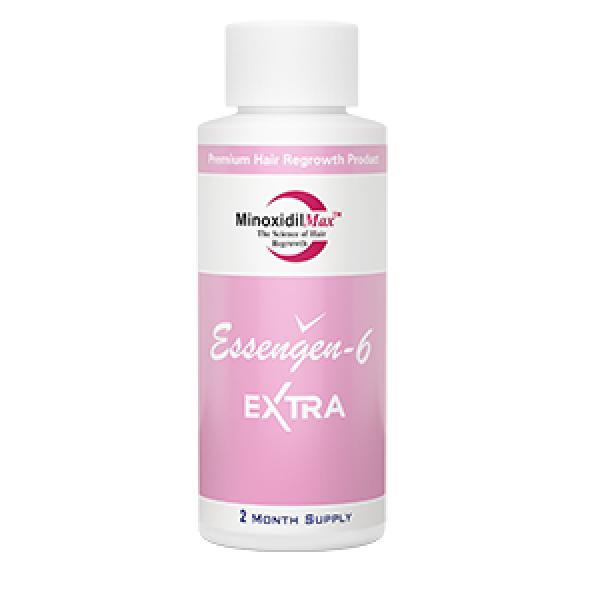
Essengen-6 Extra
powerful Finasteride and Minoxidil Solution, and scientifically designed to combat hair loss and promote regrowth. This double action formula combines the strength of Minoxidil, known for its great ability to stimulate hair follicles, with the effects of Finasteride , which helps to block the DHT hormone responsible for hair loss.
Summary: Hair Regrowth with Finasteride – What You Should Know
- Finasteride works by inhibiting DHT formation, stabilising hair follicles, and enabling regrowth over months.
- The earlier you begin treatment (with still-active follicles), the better the outcome.
- A topical finasteride formulation (such as Essengen F mentioned above) offers an alternative to oral intake and may reduce systemic side-effects — but requires medical supervision.
- Combining finasteride with minoxidil is often the best approach for stronger regrowth and higher success rates, because they attack hair loss from two angles.
- Consistency, patience (many months), and long-term commitment are key.
- Understand and monitor possible side-effects, and always work with a healthcare professional.
If you like, I can also create an Arabic version of this article (given your focus on Arabic-speaking audience) optimized for your audience and SEO. Would you like me to do that?
Why I Should Use Alcohol Free Minoxidil
Topical Dutasteride for Hair Loss